Biometric Authentication for Trust and Ease
In a pivotal academic endeavour as part of my coursework at Fanshawe College, I led the design of a banking app focused on improving Security and Trust. The project integrated advanced biometric two-factor authentication (2FA) to address the growing need for enhanced digital banking security.
Traditional banking apps rely heavily on passwords and SMS OTPs, which are prone to phishing attacks, credential theft, and unauthorized access. Users expressed persistent concerns over the complexity of managing secure access without compromising day-to-day convenience. The challenge was clear: creating a banking experience that feels ironclad yet delightfully effortless.
Uncovering Emotional Trust Thresholds
Key Insights on Banking Security: While users value security above all else, complex login flows and multi-character passwords lead to severe password fatigue and app abandonment. Users demand effortless, instant authentication that protects high-risk transactions without burdening daily balance checks.
We employed user interviews and quantitative surveys to gather qualitative and behavioral insights into users’ concerns and expectations regarding digital banking security. These methods allowed us to empathize with user pain points and validate the urgent need for advanced biometric authentication measures.
Affinity mapping was used to categorize findings into actionable themes, revealing that seamless, intuitive security features—like biometric verification—provide robust protection without compromising convenience.
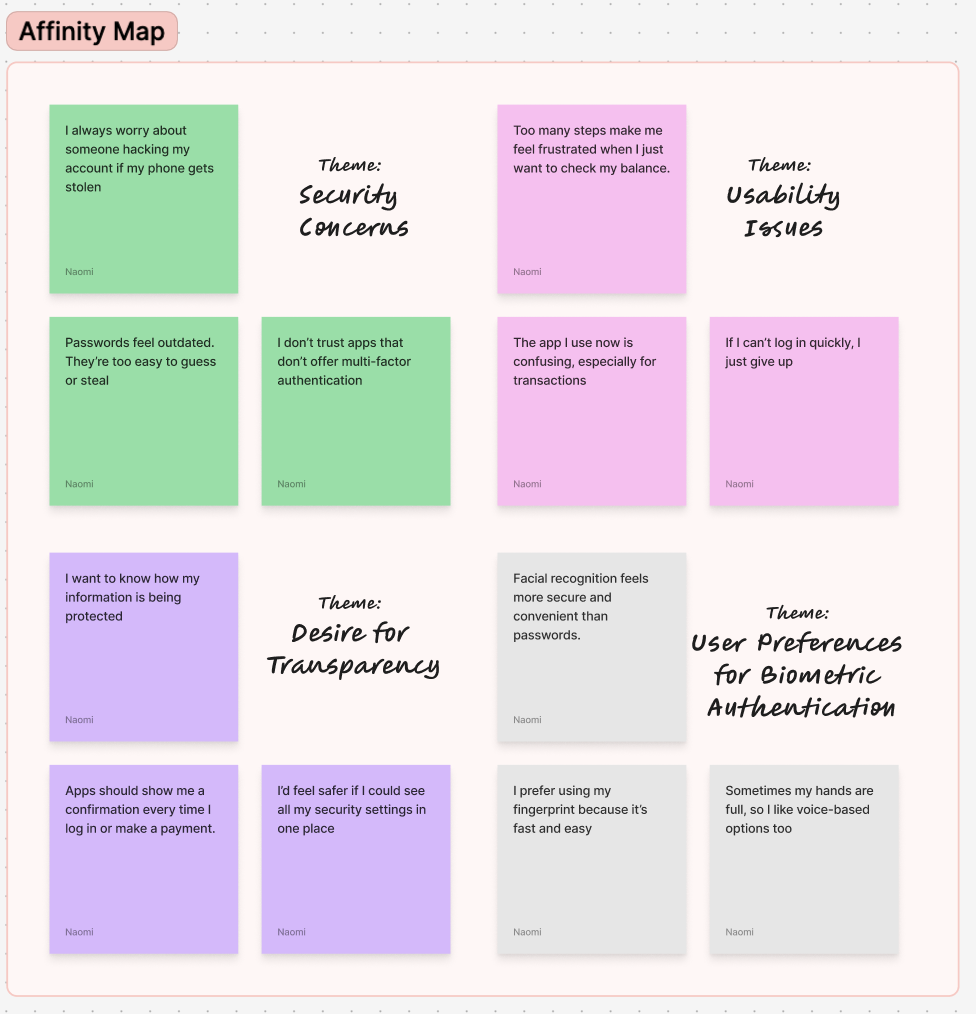
Affinity synthesis grouping user attitudes toward password fatigue vs. biometric confidence.
Turning Insights into Architectural Opportunities
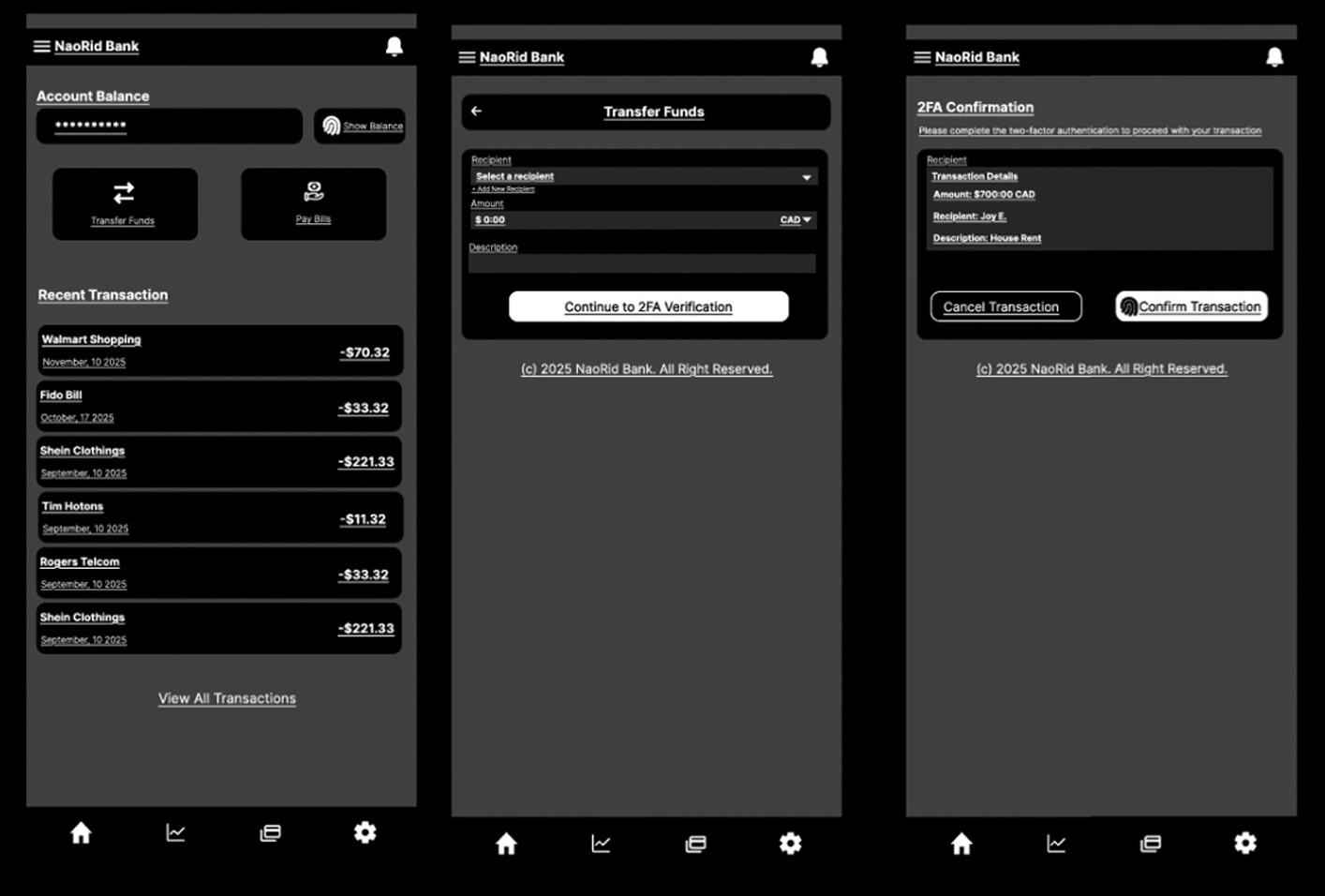
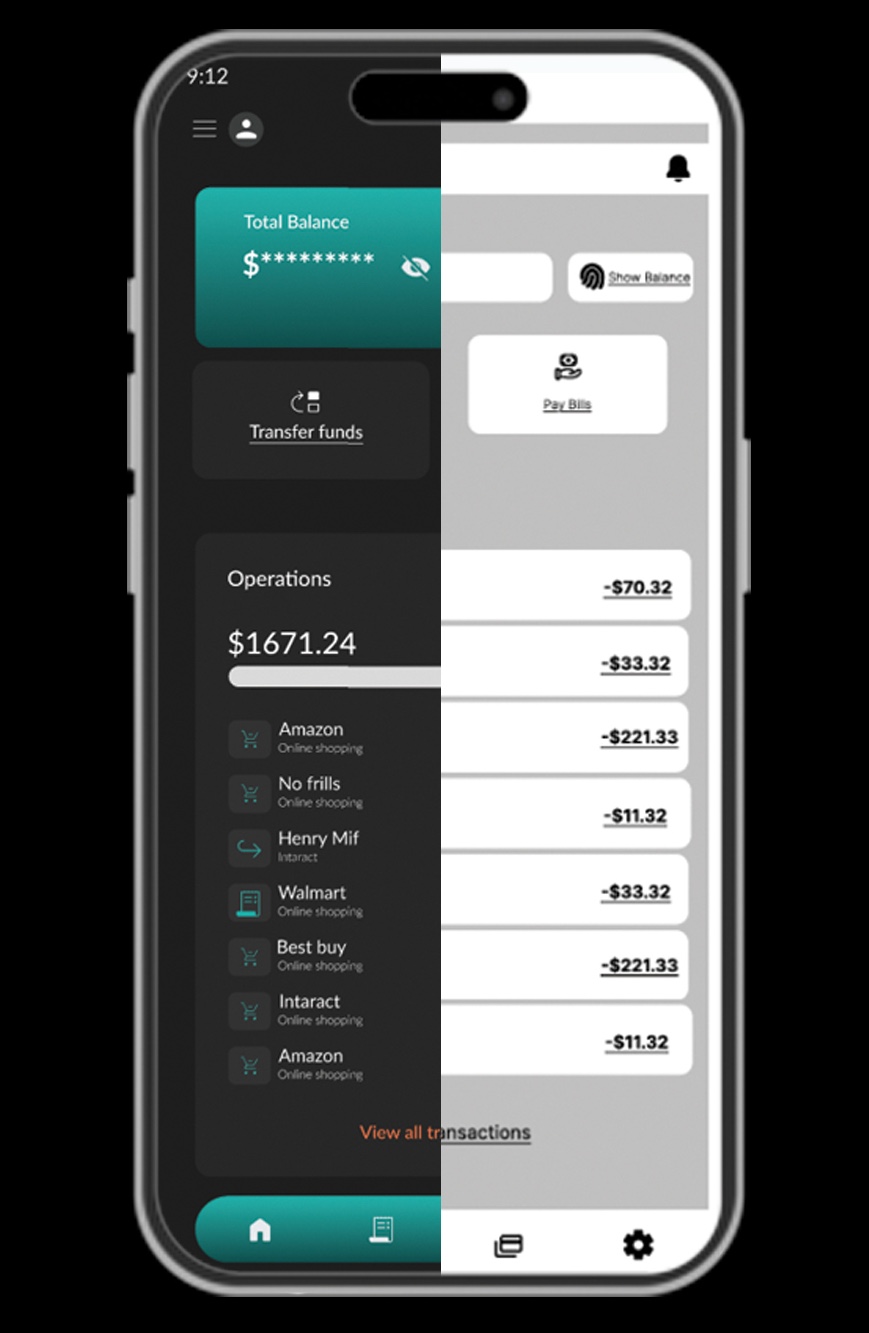
The Solutions Tree Framework was used to further refine insights and identify actionable opportunities, allowing us to focus on features that maximized security and user confidence:
Opportunity: Enhance User Trust Through Proactive Security Measures
From the Solutions Tree framework, we identified an opportunity to reinforce trust by integrating biometric authentication at login and across all critical interactions, such as transaction confirmations and sensitive account views.
Experiment: Prototype Biometric Multi-Layer Security Flow
We developed and tested a prototype featuring mandatory facial recognition for login, transaction approvals, and account overview access. Usability testing was conducted using tools like Maze to evaluate user reactions and measure task completion rates. The insights helped refine the experience to ensure security enhancements without usability trade-offs.
Overcoming Security vs. Usability Dilemmas
Core UX & Security Challenges:
Balancing Security and Usability:
• Challenge: Ensuring robust security measures (e.g. mandatory biometric scans) without creating excessive friction for users.
• Approach: Iteratively tested and refined the user journey to maintain convenience while incorporating multiple authentication layers.
User Adoption Concerns:
• Challenge: Designing features that users would trust and feel comfortable using, especially those unfamiliar with biometric technology.
• Approach: Conducted user interviews to understand hesitations and addressed them through transparent feedback mechanisms and clear onboarding flows.
Complex User Flows:
• Challenge: Incorporating multiple biometric authentication points without overwhelming or confusing users.
• Approach: Applied the Solutions Tree framework to identify critical interaction points and optimized these for simplicity and clarity.
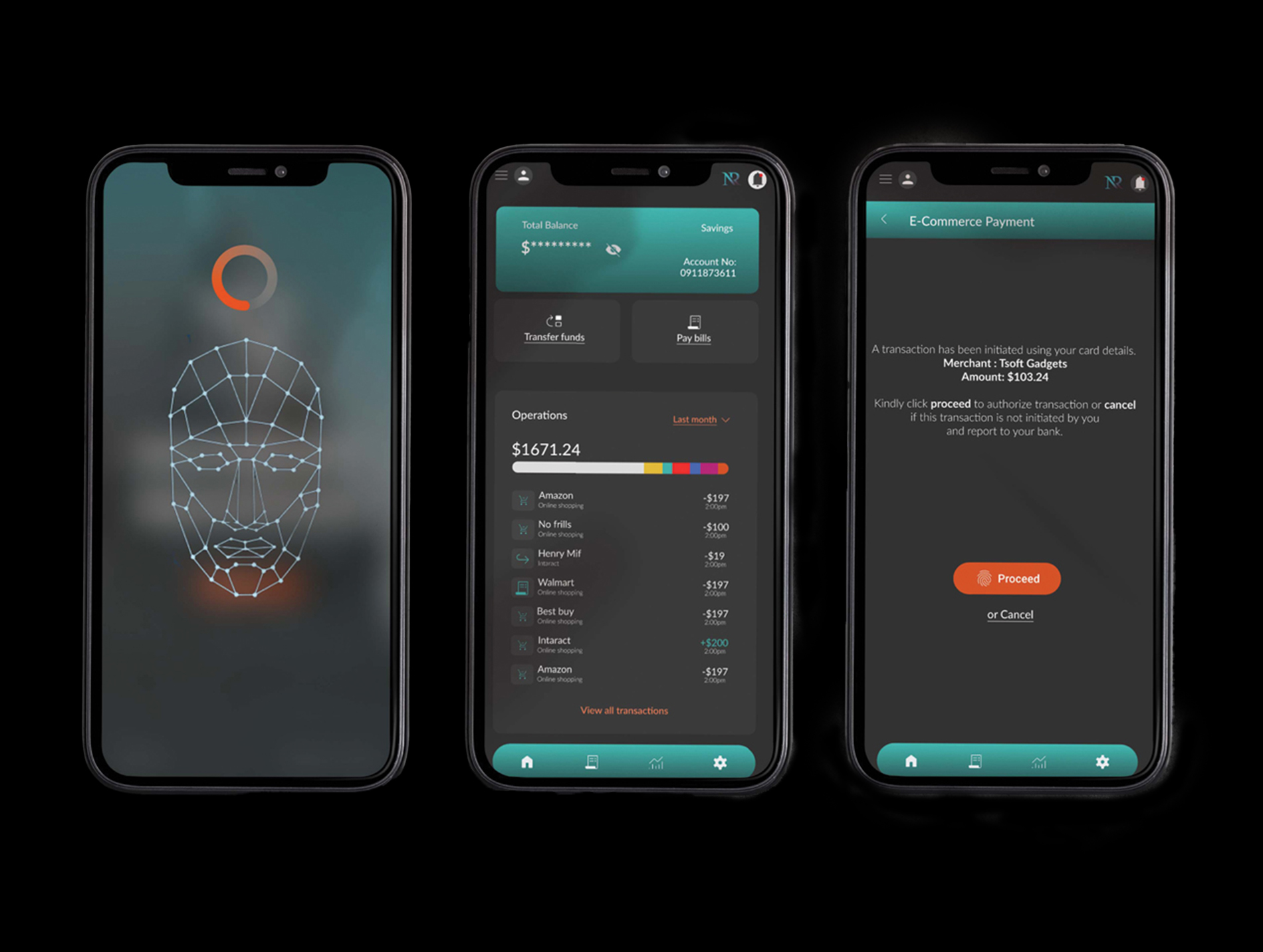
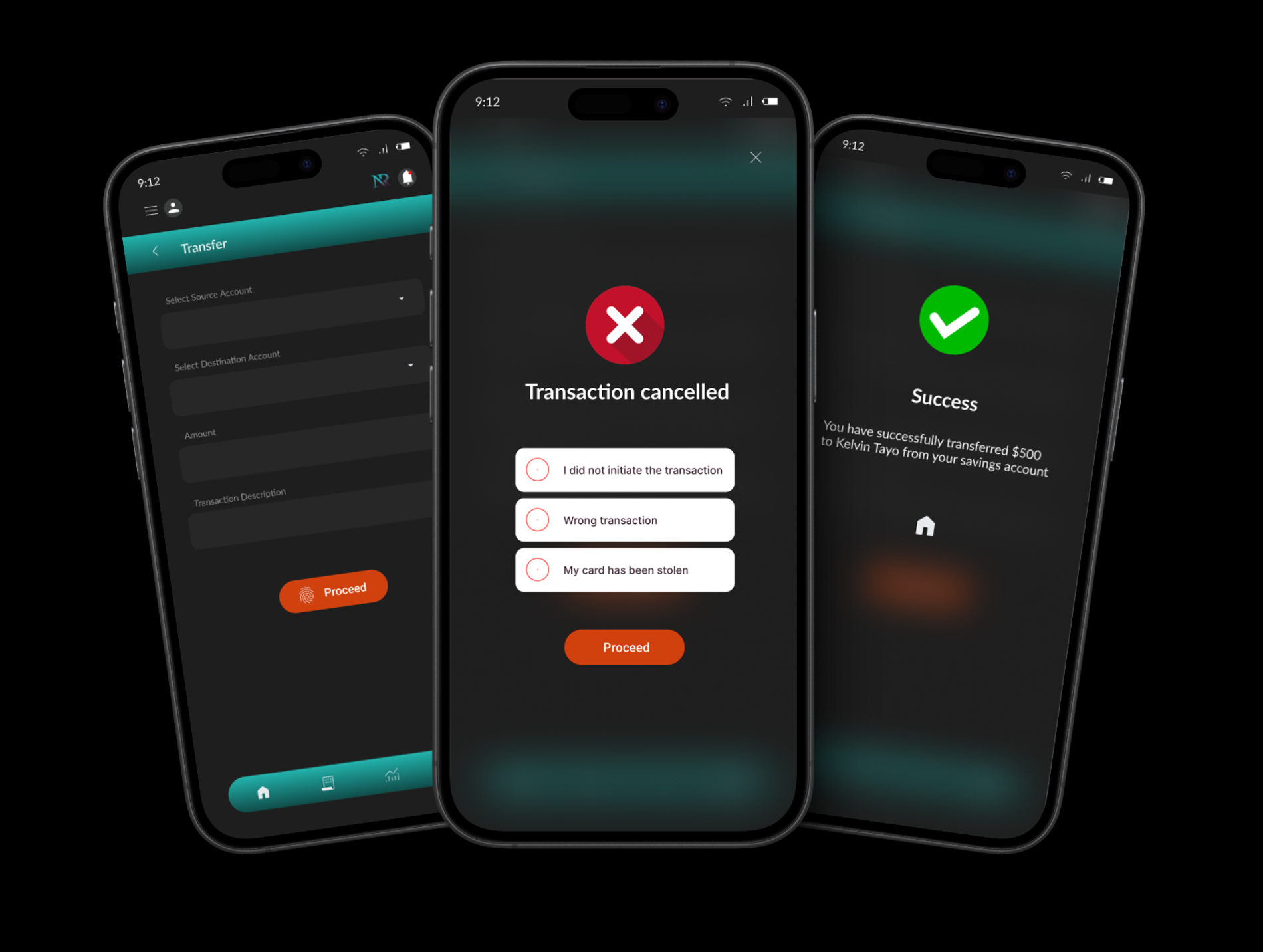
Comprehensive Multi-Point Biometric Protection
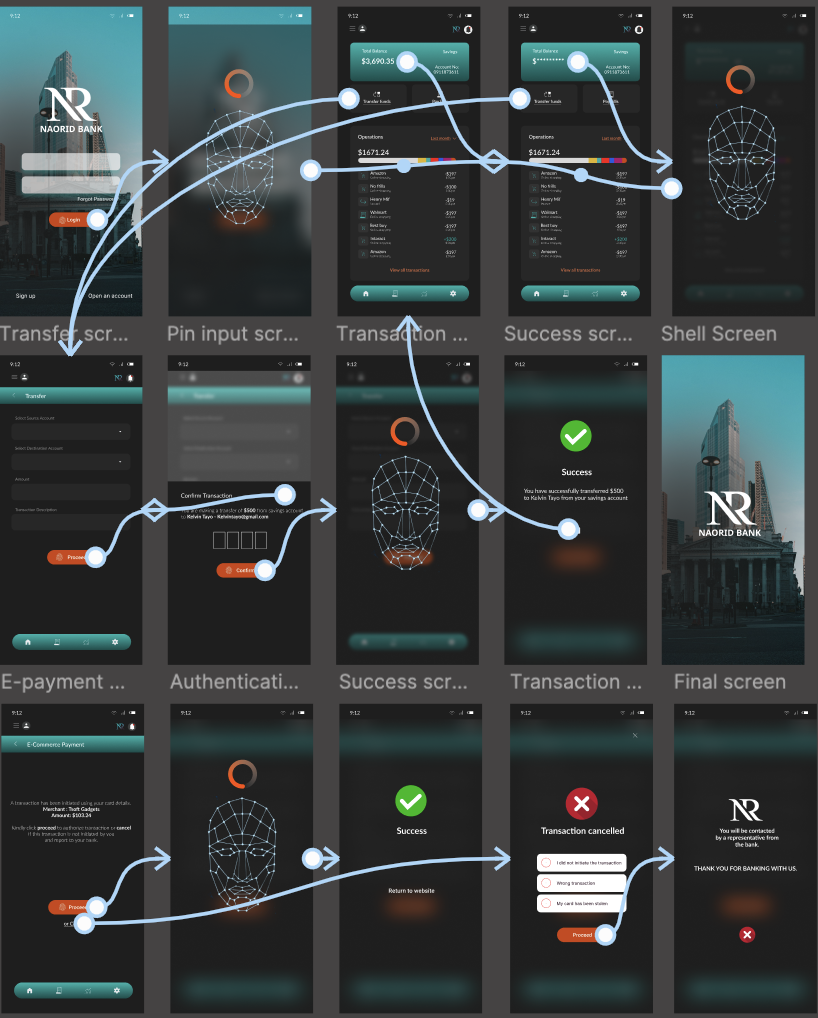
The Naorid Bank app integrates biometric 2FA as a core feature, safeguarding sensitive operations through:
- Biometric Login: Facial recognition is mandatory for account access, even after entering valid credentials.
- Secure Account Overview: Users cannot view balances or transaction history without an additional instant biometric scan.
- Transaction Approvals: Dual-layer verification—password entry followed by biometric confirmation—ensures secure fund transfers.
- E-Commerce Payments: Redirecting users to the app for biometric verification before completing online purchases.
- Issue Reporting Safeguards: Requiring biometric confirmation for flagged issues, preventing fraudulent claims.
Harmonizing Security and Frictionless UX
The Naorid Bank app redefines digital banking security by seamlessly integrating biometric authentication without sacrificing usability. This project demonstrated the power of user-centered design in addressing security concerns while maintaining a frictionless experience.
Through research-driven insights, iterative prototyping, and usability testing, we successfully balanced robust protection with user confidence. The result is a banking app that not only safeguards financial transactions but also enhances trust and accessibility. This experience reinforced the vital role of UX in financial technology, proving that security and ease of use can coexist harmoniously in digital banking.