The Stress of Traditional Job Interviews
The Stress of Job Interviews: Job interviews are a source of intense stress for many—especially for neurodivergent individuals who may struggle with social cues, unpredictable questions, or sensory overload. Traditional interview coaching often lacks personalization and accessibility, creating systemic barriers to career advancement.
Critical Findings from Candidate Research
Students: Often lack access to personalized feedback or realistic interview practice, especially for remote and technical roles where non-verbal communication expectations are ambiguous.
Neurodivergent Users: Need clear, consistent, and sensory-friendly environments to reduce cognitive anxiety, prevent sensory overload, and perform at their true capability.
AI Opportunity: AI can bridge the gap by offering scalable, real-time simulations and tailored, non-judgmental support based on individual user behavior and communication styles.
Auditing 5 Prominent Industry Platforms
To understand market gaps and user expectations, I conducted a structured comparative review of five prominent platforms: Big Interview, Pramp, Interviewing.io, Glassdoor Practice Interviews, and Rezi across five evaluation pillars:
- Personalization: Ability to adapt to specific roles and neurodivergent needs.
- Accessibility Options: Compliance with WCAG, sensory modes, and assistive controls.
- AI Usage: Depth of real-time conversational and behavioural analysis.
- Interface Simplicity: Cognitive load and visual distraction management.
- Feedback Mechanism: Clarity, positivity, and actionable metrics.
Key Market Observations:
- None of the reviewed platforms offered all three modes of interview (voice, video, and text).
- Accessibility features were either minimal or completely absent.
- AI usage was limited, and zero visual feedback on body language or expressions was integrated.
- No platform provided structured visual feedback like iterative improvement charts.


Human-Centered Research with 8 Candidates
To ensure empathetic, human-centered design, I conducted one-on-one interviews with 8 participants:
- 5 students actively preparing for competitive internships or first-time technical jobs.
- 3 neurodivergent individuals (2 with ADHD, 1 autistic) who offered firsthand insights into sensory triggers, processing delays, and feedback preferences.
Research Validated Decisions:
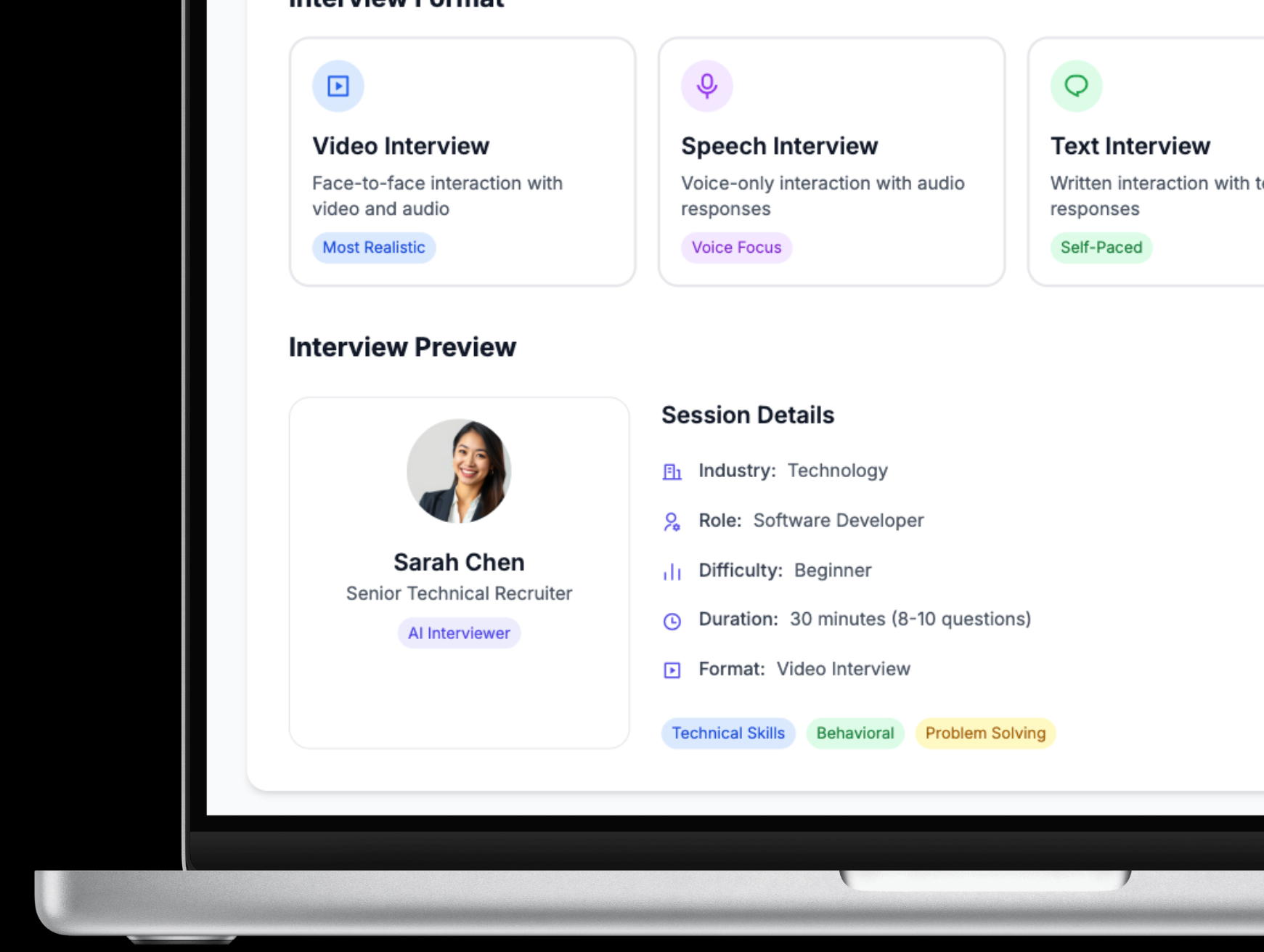
- Multi-modal interview practice (voice, video, text) empowering users to select their comfort level.
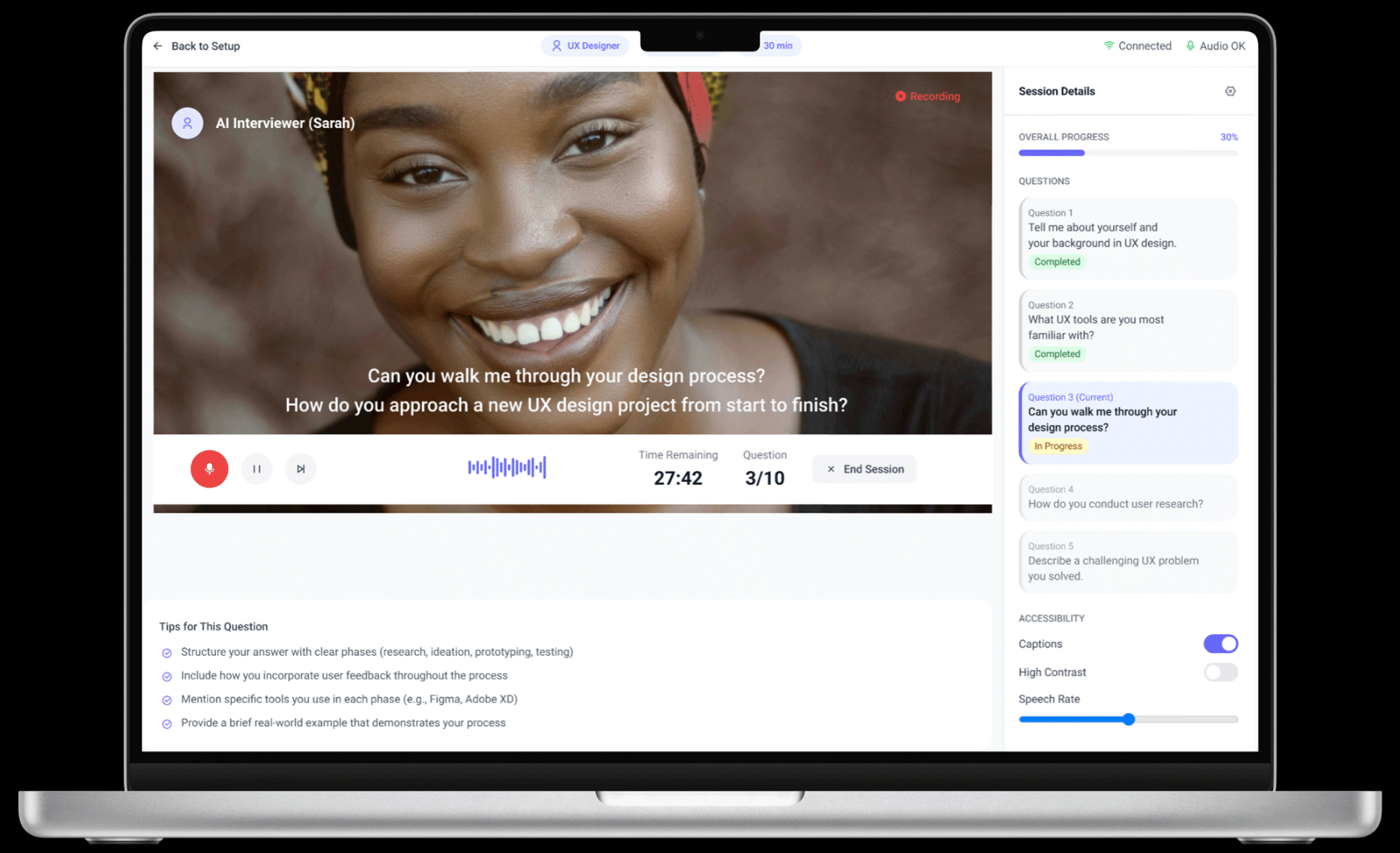
- Speech-to-text visibility in real time to help users track pacing and verbal clarity without panic.
- Non-verbal visual feedback with supportive sentiment tags (e.g., "concise", "warm tone", "steady eye contact").
- Chart-based performance tracking simplifying growth insights and motivating continuous practice.
Overcoming High-Stakes UX Dilemmas
Challenges aren't roadblocks—they are personal growth trampolines. Three primary hurdles emerged during design:
- Designing Real-Time AI Feedback that Supports, Not Overwhelms: Finding the exact threshold between providing helpful coaching points and distracting candidates mid-speech.
- Balancing Customization with Extreme Simplicity: Giving users control over avatars and interview types without cluttering the initial setup flow.
- Implementing Inclusive Features Natively: Ensuring accessibility accommodations felt like integral, empowering features rather than clunky "add-ons".

Wireframe iteration balancing multi-modal options with low cognitive load.
Adaptive, Accessible AI Coaching in Action
Elev8 introduces three core pillar capabilities:
- AI-Powered Dynamic Simulations: Users choose target industry roles and interview formats. The AI delivers realistic voice-based mock interviews with contextual follow-ups and instant tone/structure analysis.
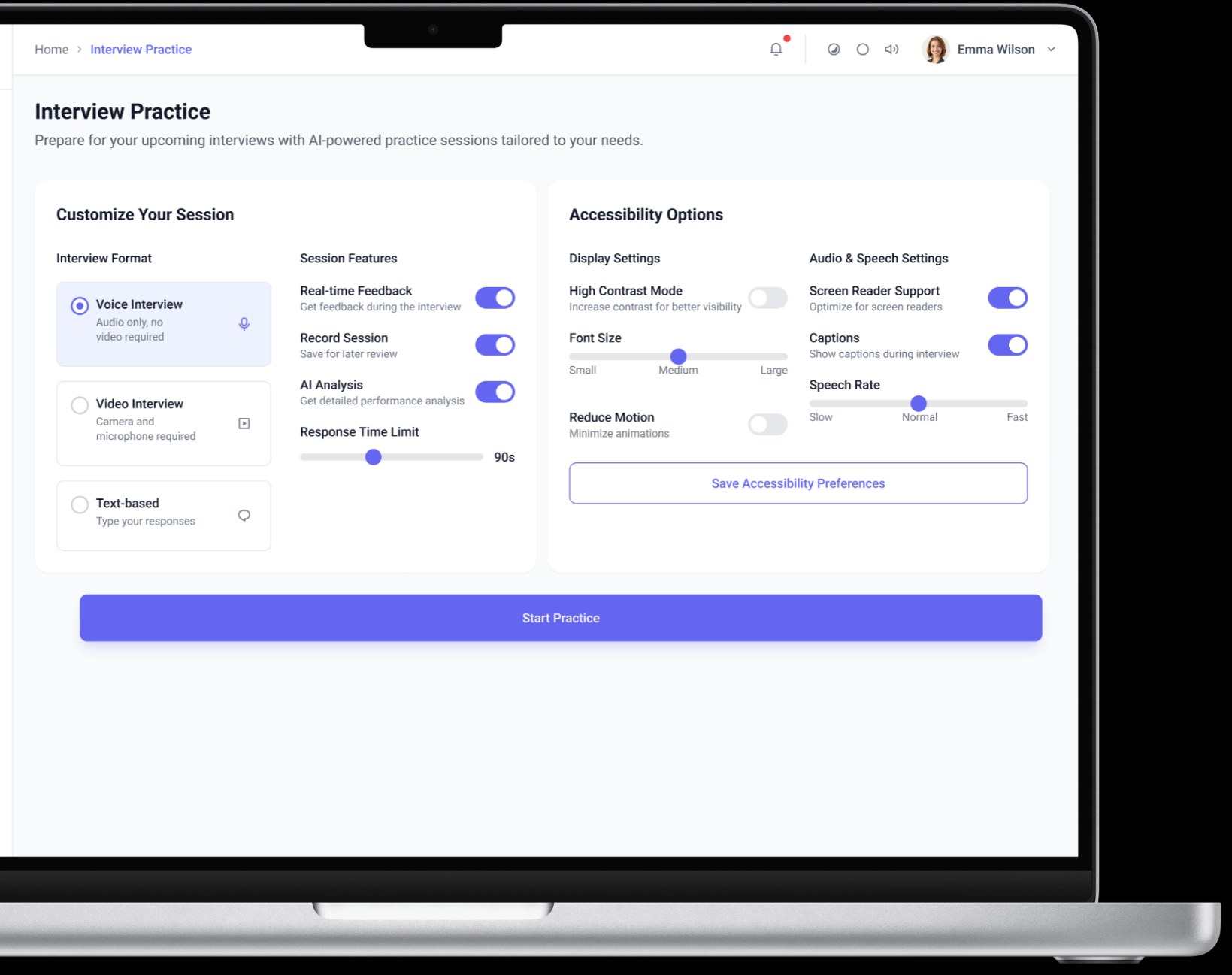
- Accessible UI (WCAG 2.1 AA/AAA Compliant): Custom typography scaling, calming dark palettes, sensory-friendly color modes, and instant text-to-speech toggles.
- Supportive, Non-Judgmental Feedback: Positivity-focused coaching points, option to pause or repeat audio feedback, and step-by-step goal metrics to eliminate overwhelm.
Sensory-Friendly Architecture Built with Community Input

Designed with direct feedback from neurodivergent individuals, the interface implements:
- Reduced Motion Toggle: Eliminates jarring animated transitions to protect users sensitive to visual motion.
- Focus Mode: Collapses extraneous UI elements, sidebars, and stats during active interview simulations.
- Consistent Visual Iconography: Universal icons paired with text labels to eliminate ambiguity.
- Adjustable Response Timing: Flexible pauses between questions so candidates can process and formulate thoughts without pressure.
Leveraging Technology for Equity
Integrating artificial intelligence into Elev8 solves structural gaps in traditional career services:
- Scalable practice available 24/7 for candidates who cannot afford expensive private coaching.
- Adaptive learning that evolves as the candidate improves in fluency and confidence.
- Objective, non-judgmental environment where candidates feel completely safe making mistakes and refining answers.
- Unlimited repetitions empowering users to practice until readiness is second nature.
Advocating for Confidence, Equity, and Inclusion
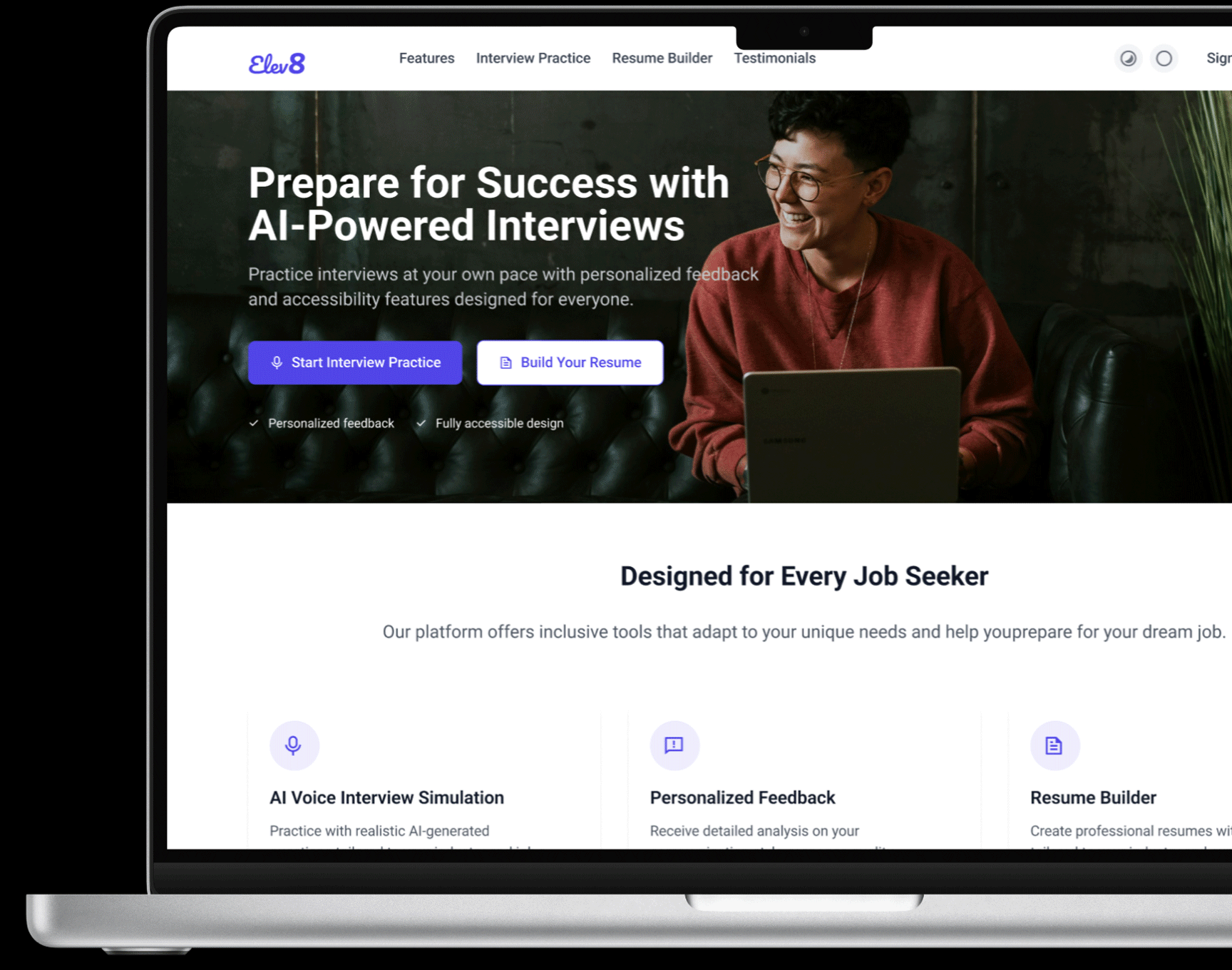
AI Interview Coach isn’t just a training tool—it’s an advocate for accessibility, confidence, and equity in the job hunt. This project allowed me to design a product that supports real-world growth, promotes inclusion, and harnesses emerging technology to dismantle long-standing barriers in the hiring process.